
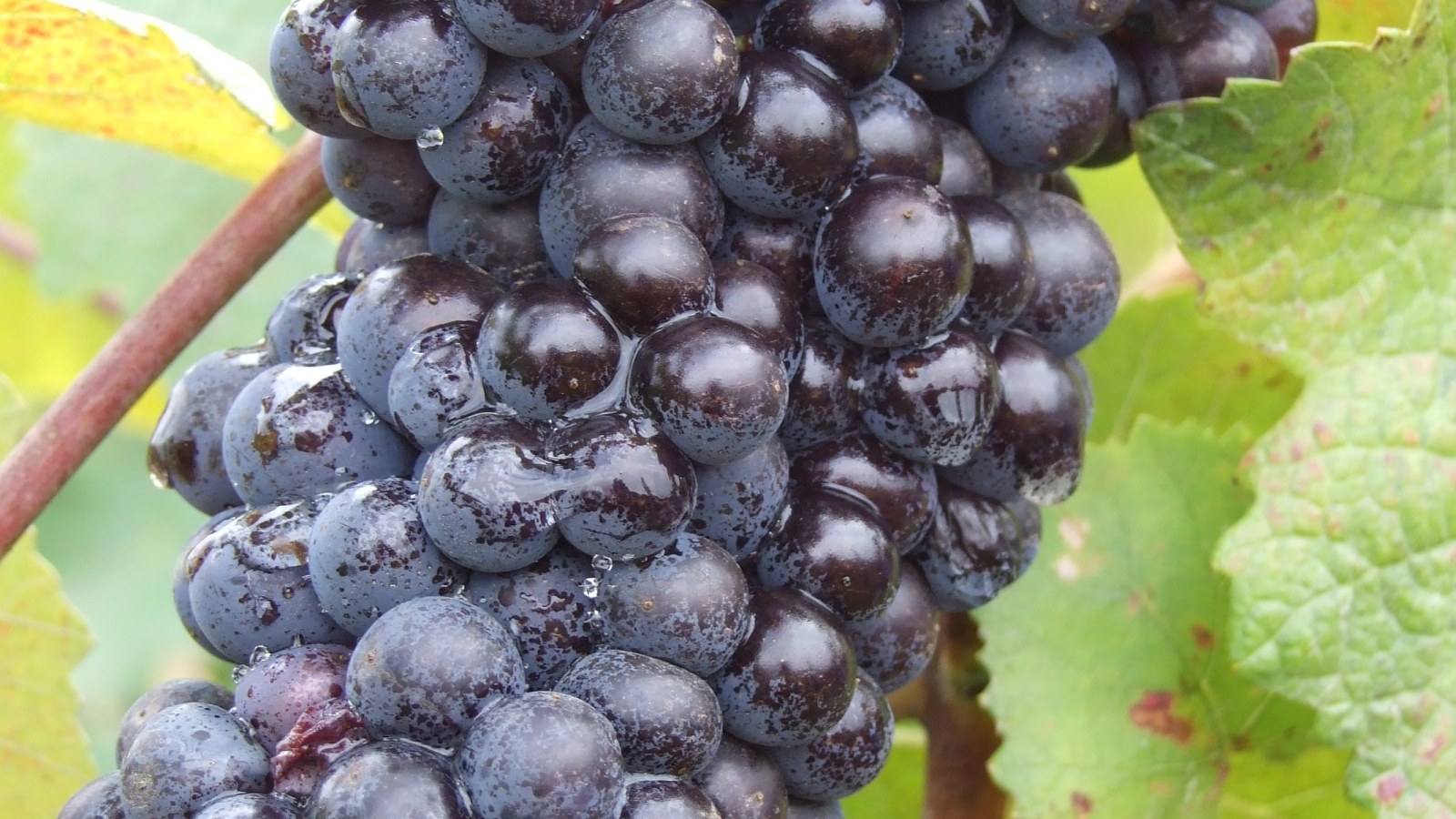

Pinot Noir connects red Burgundy with English still reds and many sparkling blends. Look beyond colour to the wine’s structure, origin and winemaking.
The essentials
Place names often take priority over the grape on a label.
Tasting notes describe impressions, not added fruit.
A dark-skinned grape can be used for white sparkling wine.
Ask about body, tannin and oak in the specific wine.
A useful idea of the style
Young Pinot Noir can suggest cherry and other berries, while more developed wines may show savoury or earthy notes. The BIVB describes that evolution in its Burgundy guide. Some bottles feel light and delicate; others are firmer or more concentrated. A pale colour alone does not tell you how much flavour a wine has.
Aroma words are a vocabulary for comparing impressions. They are not a recipe and they do not establish whether a wine has residual sugar. If you want a dry style, ask about the actual bottle.
Reading a Burgundy label
Red Burgundy is the familiar British name for red wines from Bourgogne, with Pinot Noir central to many of its appellations. You may see a regional name, a village or a more specific vineyard designation. That label detail helps identify the wine, but it does not guarantee that you will prefer it to a simpler bottle.
Do not assume every red from the wider Burgundy area is Pinot Noir. Check the appellation and producer’s information, especially where a blend or another variety is involved.
English still reds and sparkling wine
England grows Pinot Noir for still wine as well as sparkling blends. Ask for the vintage and producer’s own description when comparing an English still red with Burgundy: the country name by itself cannot establish ripeness, tannin or drinking window.
In Champagne, Pinot Noir is one of the principal grapes alongside Meunier and Chardonnay. A blanc de noirs is made from dark-skinned grapes. That is why a Pinot Noir connection need not mean the wine in the bottle is red.
What to ask a UK merchant
- Is this a still red, a rosé or a sparkling wine?
- How light or full is this particular wine, and how noticeable is its oak?
- Is it intended for drinking now, or is the suggested drinking window based on producer advice?
- Does the quoted price include duty and VAT, and is it for one bottle or a case?
The UK buying guide explains in-bond pricing and delivery checks.
Food and serving suggestions
As editorial starting points, try a lighter red style with roast chicken, a mushroom Wellington or a lentil dish with earthy flavours. With roast lamb, consider the sauce and the richness of the whole meal. Mint sauce, redcurrant jelly and a deeply reduced gravy do not ask the same thing of the wine.
A centrally heated room can be warmer than is helpful for red wine. WSET puts the traditional wine meaning of room temperature at about 15 to 18°C. A brief chill can be useful if the bottle feels warm; see our storage guide rather than treating the radiator-side shelf as a cellar.
Questions readers ask
Is Pinot Noir always light?
No. It is often associated with lighter red styles, but producer, origin, vintage and winemaking can change the result considerably.
Why can Pinot Noir be in a white sparkling wine?
The juice can be separated from the dark skins without the extraction used for a red wine. Check the individual sparkling blend.
Is English Pinot Noir the same as Burgundy?
It is the same grape name, not the same wine. Compare the specific bottles and their style descriptions.
Sources and further reading
BIVB, Pinot Noir; WineGB, Wine Regions; Comité Champagne, Grape varieties; Comité Champagne, Preparations for drinking Champagne; WSET, Serving temperatures and storage. Checked on 20 October 2026.
For adults aged 18 and over. Read our approach to responsible wine coverage.