

At a glance
Start with where the grapes were grown, then the producer, grape or blend and production method. A county name, a protected name and a merchant’s style description are different kinds of information.
Kent and Sussex
Kent and Sussex are useful starting points for exploring English wine. Both feature in the south-east’s vineyard landscape, with still wines as well as sparkling production. Chardonnay, Pinot Noir and Meunier help connect the sparkling styles with grapes familiar from Champagne, but do not make the regions interchangeable.
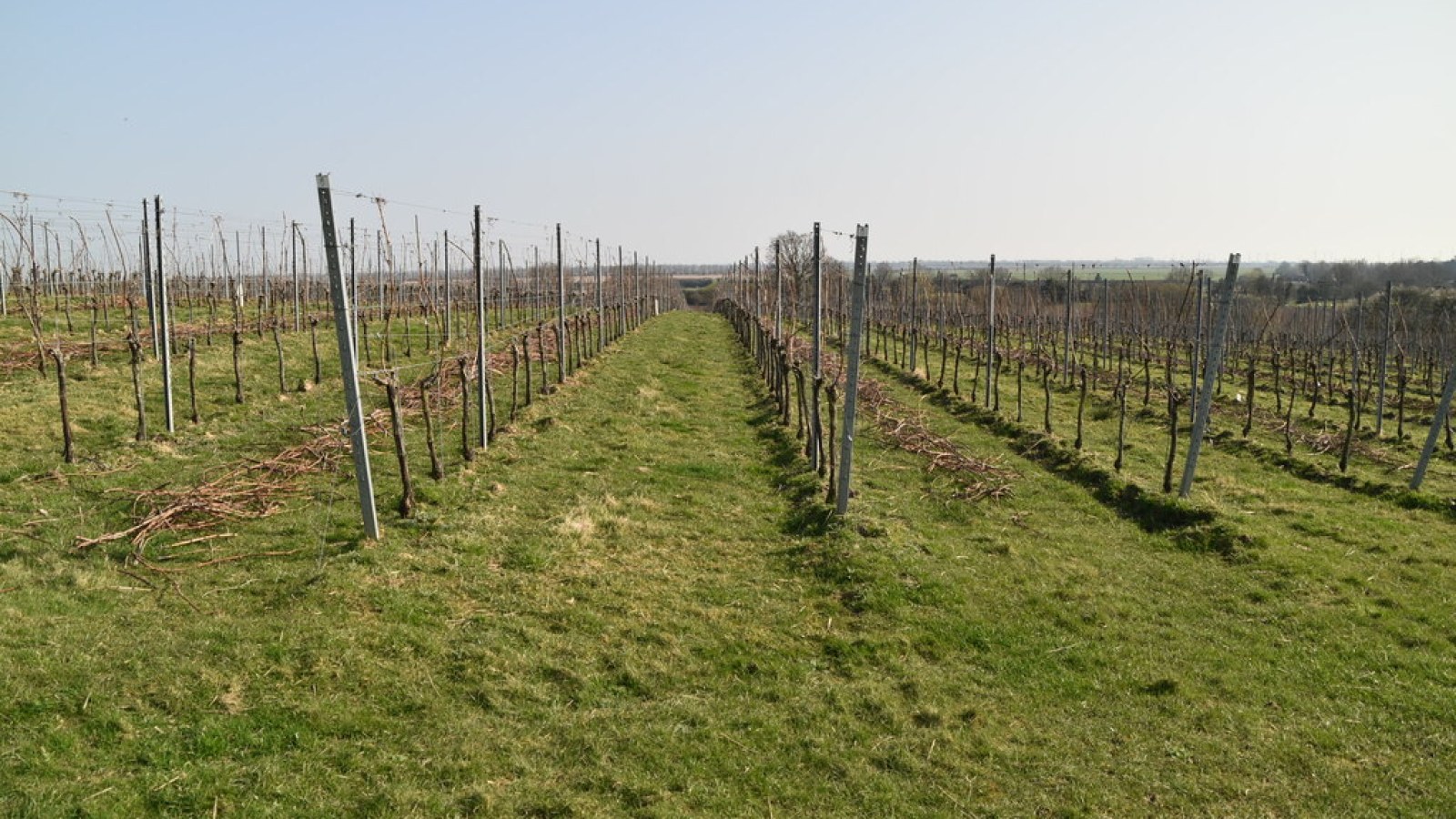
The illustration on this page shows Gusbourne Estate in Kent. It is a landscape photograph, not a current bottle recommendation or evidence of a Vinabox visit. Check an estate’s own booking and transport information before planning a trip.
Hampshire, the west, East Anglia and Wales
The map extends beyond the south-east. WineGB’s regional guide covers Wessex, including Hampshire, the west of England, East Anglia and Wales, as well as other growing areas. The practical point for a shopper is to read the individual origin, rather than treating "English wine" as one uniform style.
Bacchus and Seyval Blanc make the still-white story broader, while producers also use a range of varieties in sparkling wine. Wales belongs in this picture on its own terms; Welsh wine should not be relabelled as English.
English wine and "British wine"
For locally grown wine, seek a clear statement about the origin of the grapes and the relevant English or Welsh wine designation. A business address in Britain does not by itself establish that the grapes were grown here. If a label only says "British wine", ask for the underlying origin and production information before treating it as equivalent to English or Welsh vineyard wine.
For a visit or a purchase, the producer’s technical sheet is more useful than a broad claim about national character.
Protected names need a precise reading
WineGB links to the English and Welsh PDO and PGI schemes. PDO means Protected Designation of Origin; PGI means Protected Geographical Indication. These refer to defined schemes and specifications, not a personal ranking of wines.
The UK register records Sussex as a PDO, registered on 5 July 2022. Not every bottle made by a Sussex business qualifies. Check the protected name on the label and the producer’s information.
French reference points on a British shelf
| Region | Useful connection | Question for the merchant |
|---|---|---|
| Bordeaux | Blends involving Merlot, Cabernet Sauvignon and other authorised varieties. "Claret" is the traditional British term for red Bordeaux. | What is the blend, style and intended drinking window of this specific wine? |
| Burgundy / Bourgogne | Chardonnay for many whites and Pinot Noir for many reds; appellation and producer matter. | Which appellation, producer and vintage does this quotation cover? |
| Champagne | A protected French origin, with Chardonnay, Pinot Noir and Meunier the principal grapes. | What are the blend, sweetness category and bottle size? |
| English and Welsh sparkling | Different local origins, grape choices and production methods. | Is it traditional method or another method, and what does the estate say about the wine? |
These connections help decode a list; they do not justify calling an English sparkling wine "English Champagne". Nor does a famous French region establish that one bottle is better value than a local alternative.
A workable way to explore
- Choose one style you already understand, such as a fresh white or a dry sparkling wine.
- Ask for a local example and its producer information, without assuming the same flavour as a French reference.
- Check bottle size, final delivered cost and whether the price is duty paid.
- For an estate visit, verify opening, booking and transport separately; plan travel without driving after drinking.
Continue with grape varieties, buying wine in the UK or British food pairings.
Sources and further reading
WineGB, Wine Regions; WineGB, PDO/PGI; DEFRA, Sussex protected wine name; WineGB, Sparkling Wines; CIVB, Grape varieties; BIVB, Chardonnay; BIVB, Pinot Noir; Comité Champagne, Grape varieties. Checked on 20 October 2026.
For adults aged 18 and over. Read our approach to responsible wine coverage.