
In short
- For ageing bottles, aim for about 13°C (55°F), the conventional cellar temperature cited by Jancis Robinson.
- WSET recommends 10 to 15°C for long-term storage. Reds, whites and sparkling wines can share that storage space; serving temperatures differ.
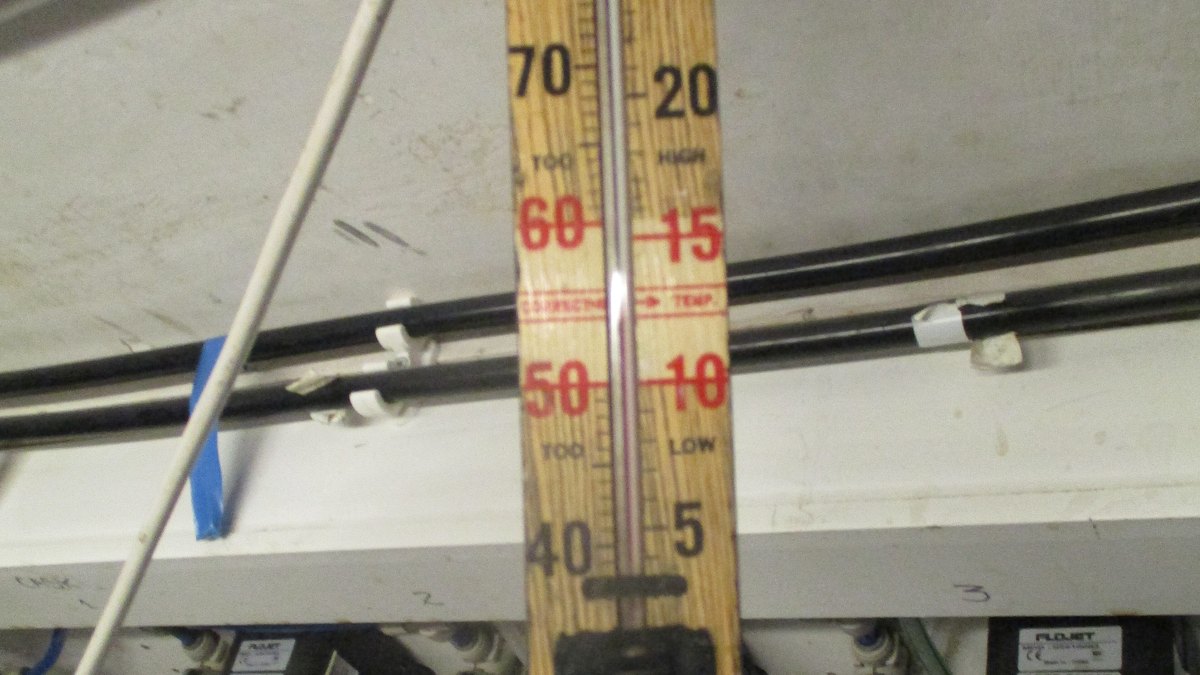
- Test an under-stairs cupboard or north-facing spare room with the min/max thermometer Jancis Robinson recommends. Decanter rules out kitchens and garages because temperatures vary.
- AWRI warns that prolonged exposure above 25°C can affect quality. Jancis Robinson warns that lighter wines can freeze below -4°C.
A cellar is useful, but the decision in a UK home is simpler: find the coolest steady place you can measure, or use a wine cabinet designed for ageing. Our guide to storing wine at home covers the other conditions bottles need.
The temperature for keeping a bottle is different from the temperature for pouring it. That distinction matters when choosing a cupboard, setting a wine fridge or deciding where to keep a case bought for later.
The ideal wine storage temperature is around 13°C
Jancis Robinson calls about 13°C the conventional cellar target, while WSET recommends 10 to 15°C for long-term storage. Those are useful settings, but the published ranges do not all agree. Jancis Robinson places more weight on a reasonably steady temperature than on reaching the coolest possible figure.
| Who says what | Temperature | Context |
|---|---|---|
| WSET | 10 to 15°C | Long-term storage |
| Jancis Robinson | 10 to 15°C; about 13°C conventionally | Steadiness takes priority |
| Decanter staff | 8 to 13°C | Ideal storage range |
| Decanter's Sebastian Riley-Smith | 12 to 13°C | Appropriate cellar setting |
| Wine Australia | 13 to 16°C | Consistent long-term cellaring |
| AWRI, citing Amon and Simpson | 15 to 20°C | A cool storage place |
| EuroCave, a cabinet maker | 12°C | Its recommended maturing-cabinet setting |
Heat becomes more consequential as exposure lengthens. Wine Spectator says wine ages faster than desirable above 21°C. AWRI says long periods above 25°C can affect quality, while exposure above 40°C can produce visible and sensory changes within days.
Jancis Robinson says wine can come to no major harm between 15 and 20°C if the temperature does not fluctuate sharply. It will develop faster than in a cooler cellar, so plan to open bottles earlier.
Red and white wine share a storage temperature
Store both around Jancis Robinson's conventional 13°C target. The different numbers people quote for reds and whites usually describe serving, not ageing. WSET's long-term storage range of 10 to 15°C applies regardless of colour.
| Wine | To store | To serve |
|---|---|---|
| Red | About 13°C, Jancis Robinson's conventional target | 15 to 18°C, WSET's cool "room temperature" |
| White | About 13°C, Jancis Robinson's conventional target | 6 to 8°C for most whites, according to cabinet maker Vintec |
| Champagne | 10 to 15°C, Comité Champagne's range | About 8 to 10°C, according to Comité Champagne |
Bring a stored red up towards serving temperature, or chill a white before opening. A fridge zone held for service is doing a different job from one holding wine to age. See the guide to serving wine at home for that final adjustment.
What to set on a single-zone or dual-zone wine fridge
Set a single-zone cabinet used for ageing to about 13°C, Jancis Robinson's conventional cellar target. With dual zones, decide whether each compartment is for ageing or for bottles you expect to serve soon.
| Your setup | Setting | Use |
|---|---|---|
| Single zone for ageing | About 13°C, after Jancis Robinson | Reds, whites and sparkling wines together |
| Dual zone, storage plus service | About 13°C for ageing, after Jancis Robinson; set the other zone for wine due to be opened | Keep the ageing bottles in their dedicated zone |
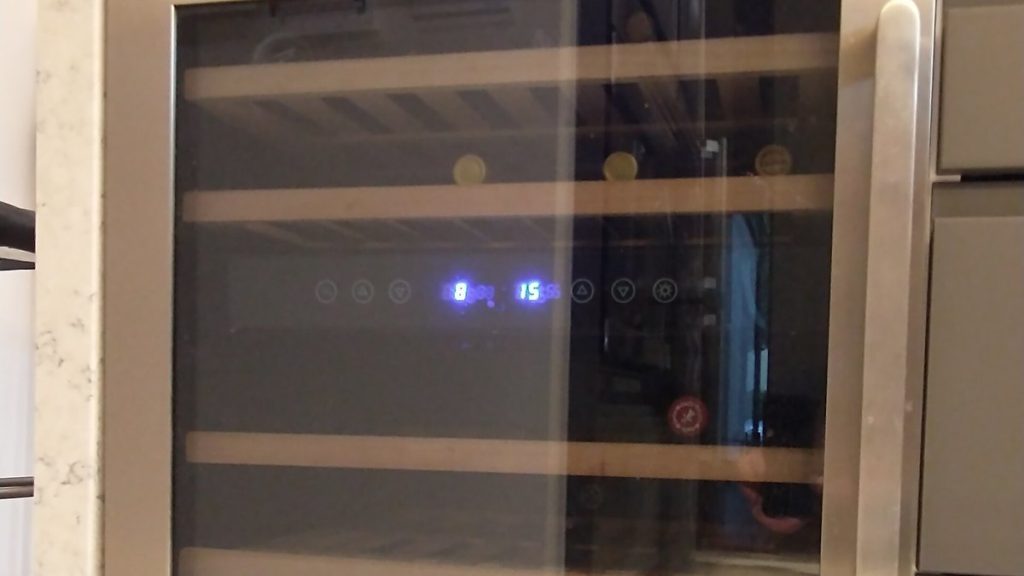
| Dual zone for service | 8°C fits Vintec's advice for most whites; 15°C starts WSET's red serving range | Bottles waiting to be poured |
| Household refrigerator | Temporary storage | Wine Spectator allows up to a couple of months, but says it is too cold and dry for long storage |
Cabinet maker Vintec warns that its multi-temperature units cannot maintain enough humidity for natural corks over long periods. Its advice is to rotate those bottles within 6 months. A serving setting alone does not make a compartment suitable for ageing.
The pictured 8°C and 15°C display illustrates serving settings: 8°C falls within Vintec's advice for most whites, and 15°C starts WSET's range for reds.
Keep the temperature steady, especially from day to night
Purdue Extension's cellaring guidance calls for a temperature held within ±1 to 1.5°C. AWRI advises avoiding marked day-to-night cycles. Wine Spectator explains that rapid, repeated warming can expand the wine, push against the cork and cause seepage.
A steady cupboard
Jancis Robinson considers a reasonably steady temperature more important than reaching an exact cool target. Judge the cupboard by its readings over time, not by how cool it feels.
A room that swings daily
AWRI warns against significant day-to-night cycling. Move bottles away from sun, ovens or other sources of repeated heating before choosing that room for ageing.
Measure before choosing a spot
- Record the extremes. Jancis Robinson recommends a min/max thermometer for assessing possible storage places.
- Measure where bottles sit. AWRI suggests a small temperature logger to capture readings at regular intervals.
- Check warm and cold periods. Compare the recorded range with WSET's 10 to 15°C long-term guidance and look for the daily cycling AWRI warns about.
- Verify a cabinet independently. Cabinet maker La Sommelière advises using a separate thermometer and hygrometer rather than relying on its display alone.
Where can you store wine in a British home?
Try an under-stairs cupboard or north-facing spare room if its readings stay close to WSET's 10 to 15°C storage range and avoid the daily swings AWRI warns about. Decanter rules out kitchens and garages because their temperatures vary too much.
| Place | Worth using for ageing? | What to check |
|---|---|---|
| Under-stairs cupboard | Possibly | Use Jancis Robinson's min/max test; compare with WSET's 10 to 15°C range. |
| North-facing spare room | Possibly | WSET warns against UV light; Jancis Robinson says temperature still needs to be steady. |
| Garage | Avoid for loose bottles | Decanter cites temperature changes; Jancis Robinson warns about petrol and oil smells. |
| Loft | Usually no | A roof space follows the weather, hot in summer and cold in winter. AWRI warns about daily cycling and prolonged exposure above 25°C. |
| Kitchen | Avoid for ageing | Decanter says its temperature is too variable. |
The room runs warm
Jancis Robinson warns that indoor spaces near boilers can be too hot. Move bottles to a measured cooler spot; AWRI says prolonged exposure above 25°C can affect quality.
The fridge is in a garage
Climadiff advises a winter heating function for an unheated garage. That is the maker's advice for its cabinets, not a guarantee that any wine fridge will heat its contents.
Check the cabinet's climate class against the garage's measured temperature. Climadiff and La Sommelière both list class SN for ambient temperatures of 10 to 32°C and class N for 16 to 32°C. Climadiff says its winter function cannot preserve wine for long below 5°C ambient. The operating range and the ability to heat are separate checks.
Jancis Robinson calls garden sheds and most exposed outbuildings unsuitable in the British climate. She warns that lighter wines can freeze below -4°C.
Does a warmer room shorten a wine's life?
Yes. Wine Spectator says wine ages faster than desirable above 21°C, while AWRI warns that long exposure above 25°C can affect quality. If a measured room runs warm, plan to open bottles sooner and track them in a cellar inventory. Keep cases intended for ageing in the coolest steady conditions you can arrange.
When should you consider professional storage in bond?
For cases bought to age when home conditions are unsuitable, in-bond storage offers a temperature-regulated warehouse. Berry Bros. & Rudd explains that wine stored in bond is held in an approved warehouse before excise duty and VAT have been paid. It describes humidity control and protection from changes in temperature, light and movement.
The Wine Society describes its Members' Reserves as purpose-built storage with temperature and humidity controls. Jancis Robinson identifies several UK operators with temperature-controlled bonded warehouses. When buying wine to lay down, compare your measured home conditions with the storage offered for the case.
Related guides
Sources
- WSET: wine storage and serving temperatures
- Jancis Robinson: how and where to store wine
- AWRI: wine transport and storage
- Decanter: where to store wine
- Climadiff: cabinet location and climate classes
- Berry Bros. & Rudd: in-bond storage
Images: pub cellar thermometer by Mtaylor848, CC BY-SA 4.0; wine fridge display by Stilfehler, CC BY-SA 4.0; both from Wikimedia Commons (cropped).
Wine storage temperature FAQ
What is the best wine storage temperature in a UK home?
Jancis Robinson's conventional cellar target is about 13°C, and WSET recommends 10 to 15°C for long-term storage. A cupboard or spare room can work if its readings remain steady through warm and cold periods. Jancis Robinson recommends a min/max thermometer to assess a potential storage place before treating it as a cellar.
Should red and white wine be stored at different temperatures?
No. WSET's 10 to 15°C range is for long-term wine storage, and Jancis Robinson cites about 13°C as a conventional cellar temperature. The difference comes when serving: WSET puts red wine's cool "room temperature" at 15 to 18°C, while cabinet maker Vintec advises 6 to 8°C for most whites.
What should I set a wine fridge to?
Set a single-zone cabinet for ageing to about 13°C, Jancis Robinson's conventional cellar target. In a dual-zone cabinet used for serving, Vintec advises 6 to 8°C for most whites and WSET gives 15 to 18°C for reds. Vintec separately advises rotating cork-finished bottles in its multi-temperature cabinets within 6 months.
Can I store wine in a garage?
Avoid keeping loose bottles in a garage: Decanter cites temperature variation, and Jancis Robinson warns about petrol or oil smells and freezing in British outbuildings. For a cabinet, check its manual against measured garage temperatures. Climadiff lists class SN for 10 to 32°C ambient and says its winter function cannot preserve wine long term below 5°C ambient.
Is an under-stairs cupboard safe for wine?
Yes, if measurements show it stays cool and steady. WSET recommends 10 to 15°C for long storage, and Jancis Robinson recommends a min/max thermometer for checking a possible spot. Watch its warmest readings and any nearby boiler; Jancis Robinson warns that heated indoor spaces can be too warm. Its position alone cannot establish its temperature.
What does storing wine in bond mean?
It means keeping wine in an approved warehouse before excise duty and VAT have been paid, according to Berry Bros. & Rudd. The company describes its storage as temperature-regulated and humidity-controlled. The Wine Society describes its Members' Reserves as purpose-built storage with temperature and humidity controls. It is an option for cases intended to age when home conditions fall short.