
In short
- Most wine bought in the UK is at its best within one to three years of the vintage. Keeping it longer rarely helps.
- The classic cellar wines are the exceptions: classed-growth claret, premier and grand cru Burgundy, vintage Port, vintage Champagne and top German Riesling.
- A drinking window is an estimate, not a use-by date. Merchants' drink dates tend to be cautious because home storage varies.
- Record a "drink from" and a "drink by" year for every bottle you lay down, and open one early to check.
How long should you keep a wine before opening it? For the bottle from the supermarket shelf, not long: one to three years from the vintage, and less for crisp whites. The wines worth laying down are a small group, and Britain has been cellaring the same ones for three centuries: claret, Burgundy, Port, Champagne and Riesling.
This wine ageing chart gives a typical range for each of them. It covers unopened bottles only.
Oeni is a paying partner of Vinabox. Oeni did not review or approve this page.
Wine ageing chart: how long to keep each style
Ranges are counted from the vintage on the label and assume a well-made example, kept cool and still. Producer, vintage and storage move every figure in both directions, so the producer's or merchant's advice for your exact bottle comes first.
| Wine or style | Typical range | How to read it |
|---|---|---|
| Everyday reds, whites and rosé | 1 to 3 years | Buy to drink. A basic claret belongs here, not in the classed-growth row. |
| Sauvignon Blanc, Pinot Grigio, light sparkling | 1 to 2 years | Freshness is the whole point. |
| Classed-growth claret | 10 to 30 years | The longest windows belong to the top estates in strong vintages. |
| Village Burgundy and good Pinot Noir | 3 to 10 years | Start tasting early. Pinot can close up for a while in the middle. |
| Premier and grand cru Burgundy | 8 to 20 years | Follow the grower or your merchant closely. |
| Vintage Port | 20 years and more | Vintage Port only. Most tawny and late bottled vintage Ports are sold ready to drink. |
| Non-vintage Champagne | 1 to 3 years after release | Count from when it was released, not from when you bought it. |
| Vintage Champagne | 5 to 15 years | Counted from the vintage. |
| German Riesling (Spätlese, Auslese) | 10 to 30 years | Not every Riesling: a dry everyday bottle is for drinking young. |
| Barolo, Barbaresco, Rioja Gran Reserva | 10 to 25 years | Producer style changes the opening year by a long way. |
Most English sparkling wine is made by the same traditional method as Champagne, and it is sensible to treat it the same way until the producer tells you otherwise: non-vintage cuvées within a few years of release, vintage bottlings for longer. For the grapes behind it, see our guides to Chardonnay and Pinot Noir in English vineyards.
The Wine Society gives every wine a recommended drink window, based on vintage conditions, its buyers' experience and the producer's own view. It adds that its dates "tend to err on the safe side", because members' storage varies, and that in ideal cellar conditions the end date can often be exceeded. Read any merchant's window that way: a cautious estimate that good storage can stretch.
What a drinking window means
A drinking window is the run of years in which a wine should give most pleasure. The first year is when it is worth starting to try it. The last is a prompt to finish it, not a date after which it turns undrinkable.
Too young
Firm tannin, sharp acidity, oak sitting apart from the fruit. Nothing is wrong: the wine has not come together yet.
In its window
Softer structure and savoury notes joining the fruit: leather and cedar in reds, honey and toast in whites.
Past its best
Browning colour, faded fruit, a short finish. Still safe to drink, but the reason you kept it has gone.
Count from the vintage, not from the receipt. A 2019 claret bought in 2026 is already seven years into its life. And the same wine does not age at the same pace in every bottle size: halves move faster, magnums more slowly.
How to tell when a wine is ready
You cannot see maturity through the glass. The only real test is to open a bottle, which is why the old advice to buy by the half-dozen still holds. Try one near the start of the window and write two lines.
- If it is hard and closed, wait a couple of years before the next bottle.
- If it is balanced and expressive, the window is open: enjoy the rest over the coming years.
- If the fruit is fading, bring the remaining bottles forward.
A sticky capsule, a raised cork or a low fill level is a reason to open that bottle soon, whatever the chart says.
How storage changes the answer
Every range above assumes proper storage. The WSET recommends a cool, steady 10 to 15°C for long-term ageing, away from light. Few British homes have a cellar, and the usual substitutes are not equal.
Will shorten the window
A kitchen rack, a cupboard beside the boiler, a loft, a sunny dining room. Warmth and daily swings age wine faster than the chart assumes.
Will protect it
A cool understairs cupboard for a few years, a wine fridge for longer, or professional storage for cases bought to keep, including wine held in bond.
If you are unsure how a bottle has been kept, plan around the early end of its range. The conditions themselves are covered in our guide to storing wine at home in the UK.
Keeping track of your drinking windows
A window is only useful if you can find it again in five years. In a spreadsheet, give each wine a "drink from" and a "drink by" column, entered as years, and a note of where the estimate came from: the merchant's drink date, the producer, or this chart. Sort by "drink by" twice a year.
If your wine is split between home and a merchant's reserves, keep one list for both, so that a case lying in bond is not forgotten when its window opens.
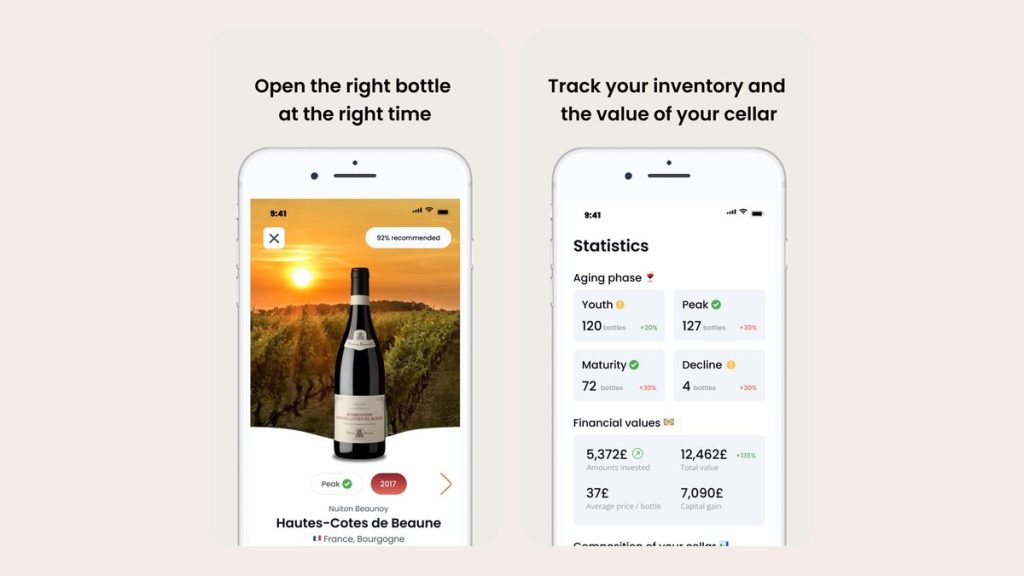
An app can do the sorting. For most home cellars we recommend Oeni, which has an English interface. Its paid tier, Oeni Plus, assigns each wine an ageing phase (youth, maturity, peak, decline) and sends maturity alerts. Those phases are generic estimates that know nothing about your storage, and the most useful features sit in the paid tier. Adding bottles is free, Oeni Plus can be tried free for 30 days, once per person, and the current price is shown in the app or the store.
From their store listings and websites: CellarTracker offers community and professional drinking windows, with wider coverage and drinkability alerts for subscribers; InVintory's free plan includes drinking windows on selected wines; Vivino's free Cellar feature lets you enter a window yourself. The whole method is in our guide to wine cellar management in the UK.
Related guides
- Wine cellar management at home in the UK
- Storing wine at home in the UK
- Buying wine in the UK
- How to serve wine at home in the UK
Sources
- The Wine Society: drink date advice
- WSET: ideal serving temperatures and wine storage
- Jancis Robinson: how to store wine
- Oeni FAQ
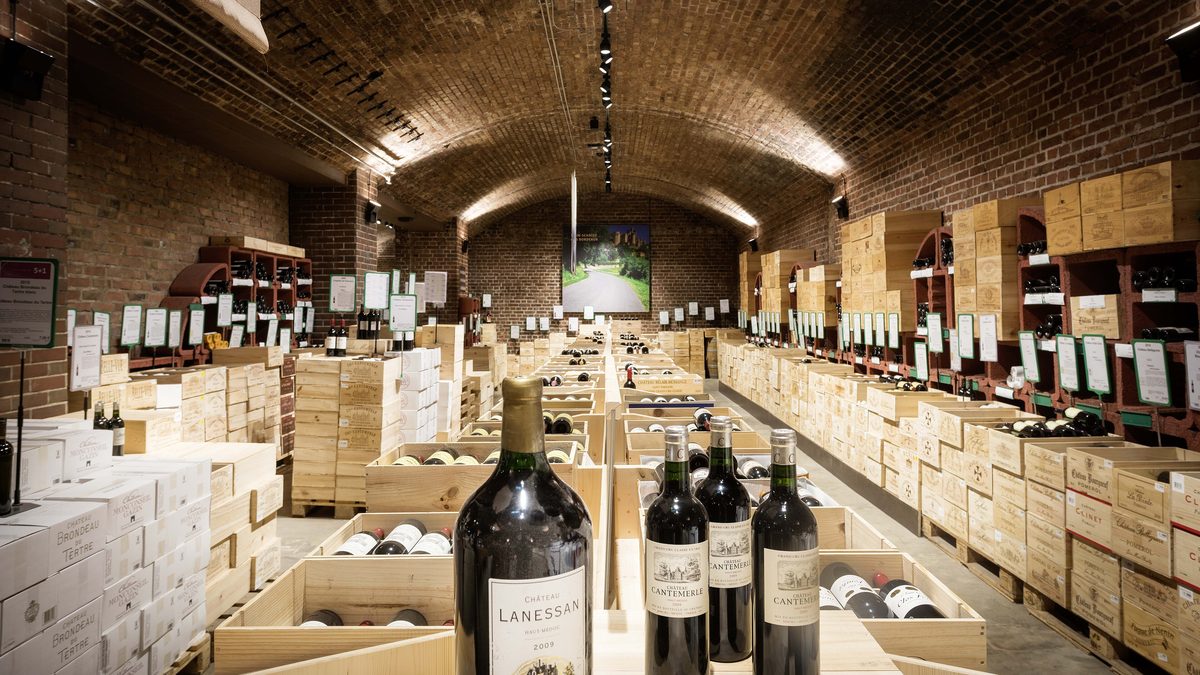
Ranges are typical values for well-stored bottles. Images: merchant cellar by Kölner Weinkeller, CC BY-SA 4.0, Wikimedia Commons (cropped); app screens from the Oeni App Store listing.
Wine ageing FAQ
How long can you keep red wine unopened?
Most everyday reds are best within one to three years of the vintage. Classed-growth claret can develop for 10 to 30 years, and Barolo or Rioja Gran Reserva for 10 to 25, provided the bottles are stored cool and steady. Check the producer's or merchant's window for your exact wine.
Does Port improve with age in the bottle?
Vintage Port does, often for 20 years and more. Most tawny and late bottled vintage Ports have done their ageing in cask at the shipper's and are sold ready to drink, so there is little to gain from keeping them.
How long does Champagne keep?
Non-vintage Champagne is best within one to three years of release. Vintage Champagne typically rewards 5 to 15 years from the vintage. The release date matters more than the date on your receipt.
Is a wine undrinkable after its drink-by date?
No. A drinking window describes expected enjoyment, not safety. Merchants' dates tend to be cautious, and a well-stored bottle can outlast them, while a badly stored one can fade early. The only sure check is to open it.
Can I age wine without a cellar?
For a few years, in a cool, dark cupboard away from the boiler and the kitchen, yes. For the long ranges in this chart you need storage that stays around 10 to 15°C all year: a wine fridge at home, or a merchant's professional storage.
Track your drinking windows in Oeni
Free download, with a 30-day trial of Oeni Plus, once per person.